
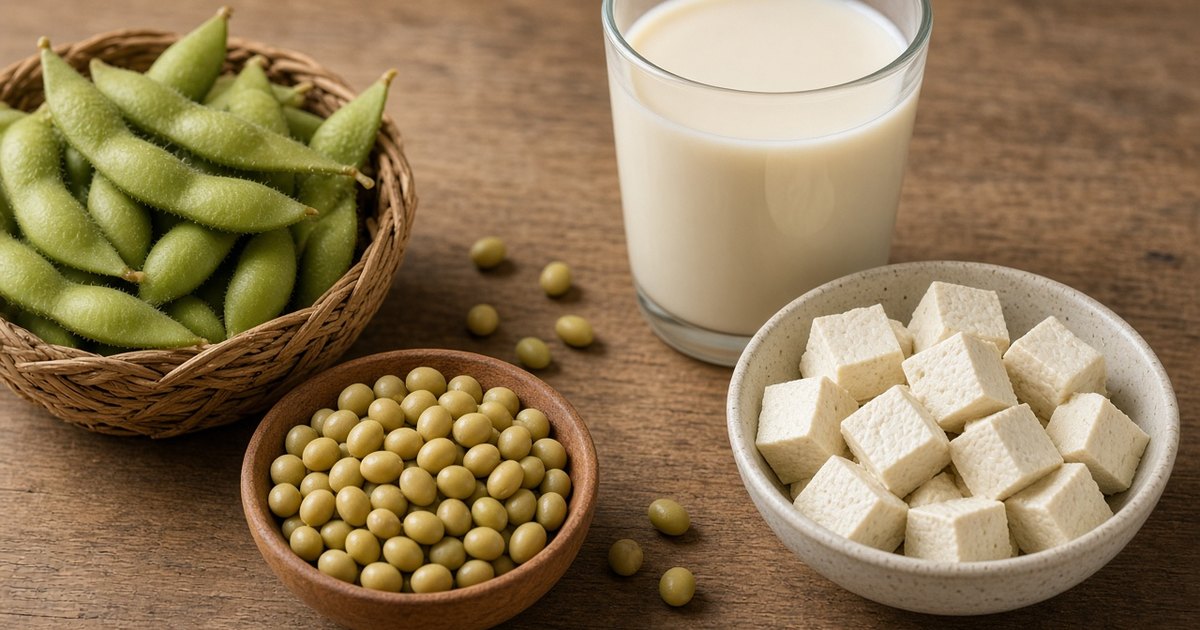
"Soy is poison for guys. It will grow you a chest, drop your testosterone, and make you soft." That line has hung around the gym, the internet, and family dinners for years. It sounds scary and sticky. But when you dig into it, the whole scare rests on one mix-up: that a phytoestrogen is the same thing as human estrogen. It is not. And that single mistake grew into the whole bogeyman.
No. In clinical studies, normal soy intake in men does not lower testosterone or raise estrogen, and it does not change body composition. Data on sperm quality are limited and mostly observational, with mixed results. The isoflavones in soy are plant phytoestrogens that bind to the same sites in the body much more weakly than the human hormone. In the amounts you eat from tofu or edamame, they have not been shown to cause feminization.
What is in soy
Soy contains compounds called isoflavones. Those are the famous phytoestrogens. The word "estrogen" in the name sparks panic, but that is a trap. Phytoestrogens are plant compounds. They are different molecules from your own estrogen, but their structure is similar enough to bind to estrogen receptors, much more weakly than your own hormone. The word that matters here is "weakly."
Human estrogen is a strong, clearly targeted player in the body. A phytoestrogen is a distant cousin next to it: it binds much more poorly, acts many times more mildly, and in places acts differently. Think of a spare key that fits in the lock but cannot turn it properly.
Phytoestrogen vs. human estrogen: why they are not the same
This is the whole core of the myth, so here it is in a table, black and white:
| Term | What it is |
|---|---|
| Human estrogen | Your body's own hormone. Strong, targeted, and it really drives a lot of processes. What people picture when they hear "estrogen." |
| Phytoestrogen (isoflavone) | A plant compound from soy. It binds to the same sites much more weakly and acts differently. In normal amounts it will not flip a man's hormonal balance. |
See the difference? Mixing one up with the other is like saying that wearing a firefighter jacket makes you a firefighter. The whole "soy = estrogen" scare rests exactly on that swap.
"Tofu will grow you breasts." Is there anything behind that?
Not in the amounts people eat. Tofu, tempeh, edamame, or soy protein in normal amounts are not a hormonal bomb. The idea that soy will "grow a guy breasts" comes from a few extreme cases, see below.
Sure, if you dig around online you will find scary stories. Almost always they are rare extreme cases: someone who consumed extreme amounts of soy foods or soy milk every day over a long period, or someone with a specific health condition. Those outliers then get sold as the everyday reality you get from a serving of tofu at lunch. That is like fearing water because someone drowned in a storm at sea. It has nothing to do with a calm pool.
Soy is a great protein
Now flip it the other way, because this is where soy gets the most unfair treatment. Soy is one of the few plant proteins with a complete amino acid profile, meaning it has all the building blocks your body needs for muscle, and that is not a given with plants. Tofu, tempeh, edamame, and soy protein are solid options when you want to add protein.
Soy is especially useful if you eat plant-based or cut back on meat. For those people it is one of the best quality protein sources there is. But it also makes sense for a regular eater who just wants variety and something extra in the diet. Soy works for muscle building, especially if it helps you hit your daily protein.
When caution makes sense
There are a few situations where caution with soy makes sense:
- Soy allergy. An individual allergy is a real thing. If you have one, avoid soy, but that is about the allergy, not hormones.
- A specific health condition. If you are dealing with a particular illness or taking medication where soy may matter (for example thyroid medication), do not solve it from the internet. Talk it through with your doctor. This is not advice for everyone, only for specific exceptions.
- Extreme supplement doses. Tofu in a meal is one thing. High doses of concentrated soy isoflavones from a powder are another. With supplements, dose still matters, like with everything else.
For a healthy person who eats tofu, soy foods, or edamame as part of a normal diet, soy is fine. None of those exceptions apply.
What to do with this in practice
Take a sensible approach to soy:
- You like soy? Eat it as a protein source. Tofu, tempeh, edamame, soy protein: treat them as a normal part of your diet.
- You are a guy and worry about feminization? You do not need to. In studies, normal soy intake has not shown a meaningful effect on testosterone or estrogen in men. If you notice changes in your breast tissue, see a doctor. It usually has causes that have nothing to do with soy.
- You eat plant-based or cut back on meat? Soy is one of the most valuable complete protein sources you have. Use it.
- You have an allergy or a specific health reason? Then yes, handle it individually, ideally with a doctor. That does not apply to everyone else.
So the next time you hear that "soy is poison for guys," translate it to "someone mixed up phytoestrogen with estrogen." Soy is a common legume and a quality protein. If you like it, eat it without guilt or fear. Put your energy into the things that decide your physique: deficit, protein, and training. Be Effective!
Frequently asked questions
What is the difference between a phytoestrogen and human estrogen?
Human estrogen is your body's own hormone: strong and targeted. A phytoestrogen (isoflavone) is a plant compound from soy that binds to the same sites much more weakly, acts many times more mildly, and in places acts differently.
Is soy a good protein source?
Yes. Soy is one of the few plant proteins with a complete amino acid profile, so it has all the building blocks your body needs for muscle. It is especially useful if you eat plant-based or cut back on meat, and it does not hurt muscle building.
When does soy call for caution?
With a soy allergy, with a specific health condition or medication where soy may matter, for example thyroid medication (talk that through with your doctor), and with high doses of concentrated soy isoflavones from supplements. For a healthy person who eats tofu, soy foods, or edamame as part of a normal diet, soy is fine.
Where do the stories about men growing breasts from soy come from?
Almost always rare extreme cases: someone consuming extreme amounts of soy foods or soy milk every day over a long period, or someone with a specific health condition. Those outliers then get sold as everyday reality.
Related reading
- How much protein you actually need per day
- Can you build muscle in a calorie deficit? Yes
- Plant vs. animal protein for muscle
Want me to coach you?
Gold coaching in English, fully written. A weekly report from your phone (3 minutes), my written answer with your plan, WhatsApp support Monday to Friday, calories and macros adjusted every week, a plan for eating out and travel. No video calls needed.
Apply for coaching Get the free Fat Loss Kit Calculate your calories
Martin Barna
Online nutrition and fitness coach. Since 2013 I have coached 600+ clients through fat loss. I work with what research shows and what I see in my clients.
Apply for coachingThis article is for information only. It is not medical advice. If you have a health condition, talk to your doctor.