
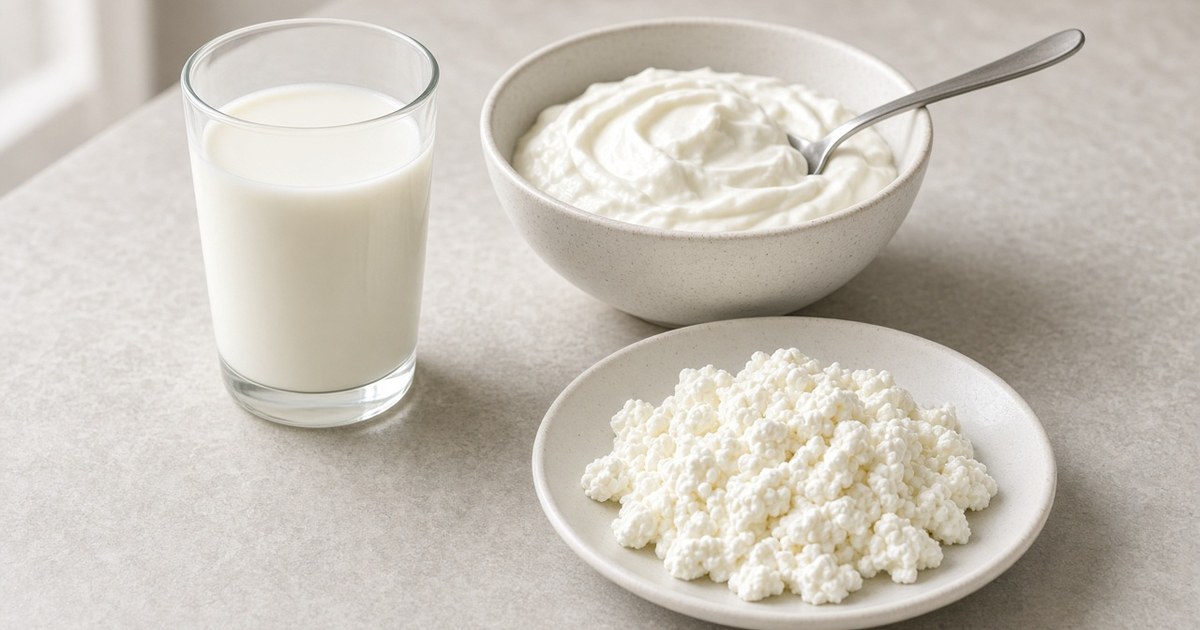
"Milk is for calves, not for adults." "It makes you phlegmy." "It is inflammatory." You hear these lines on repeat, and they sound almost scientific. For a healthy adult without lactose intolerance or a milk allergy, they are not true. Dairy is one of the best sources of quality protein you can buy in a normal grocery store.
If you do not have lactose intolerance or an allergy to milk protein, dairy fits well into a normal diet for most healthy adults. Dairy is one of the best sources of complete protein, and it supplies calcium your body absorbs well. Plain, low-fat cottage cheese, skyr, and Greek yogurt give you a lot of protein for not many calories.
Dairy is not "poison" for an adult
Cottage cheese, skyr, Greek yogurt, cheese: these foods work as a nutritional anchor in a fat-loss diet and outside of one. For most healthy adults, dairy fits well into a normal diet, and there is no good reason to avoid it. Being an adult does not mean milk suddenly harms you. That is an ordinary myth that came from mixing up different ideas.
"It creates mucus" and "it is inflammatory": what is actually true
The feeling that a glass of milk coats your mouth is real. What you feel is a temporary texture. Milk is a slightly thicker liquid, and for a moment it changes how your mouth feels, the way a thick smoothie does. Studies in healthy people have not found that milk increases mucus. A few minutes later the feeling is gone.
And "milk is inflammatory for everyone"? That does not hold either. Systematic reviews of controlled trials have found that dairy does not raise inflammation markers in healthy adults. Some even found a small opposite effect. The label stuck to it the same unfair way it stuck to fat or carbs: a serious-sounding word that does not rest on a real foundation. If dairy causes you no symptoms, there is no reason to cut it out.
Lactose intolerance is real, and it is about digestion
Some people really do not tolerate milk. That is lactose intolerance. The body does not have enough of the enzyme that digests milk sugar, so milk brings digestive trouble: bloating, gas, sometimes diarrhea. That is completely real. If digestive trouble keeps coming back, have it checked by a doctor. Similar symptoms can have other causes.
Intolerance affects digestion in some people. It says nothing about milk in general. And you can live with it just fine:
- Lactose-free versions. You can buy lactose-free milk, yogurt, cottage cheese, and skyr. It tastes slightly sweeter, because the lactose is already broken down into simpler sugars.
- Fermented and aged. Hard aged cheeses contain almost no lactose. Yogurt and kefir still contain some, but their live cultures help break it down, so many people with mild intolerance handle them well.
So even if straight milk does not sit well, you do not have to give up the protein or the satiety. You pick a different version.
Lactose intolerance and milk allergy are two different things. Intolerance is about digesting milk sugar. A milk allergy is an immune reaction to milk protein, and it can be serious. Lactose-free products still contain milk protein, so they are not an option if you are allergic. If you suspect an allergy, talk to your doctor.
Cottage cheese, skyr, yogurt: a top tool for fat loss
High-protein dairy sits near the top of fat-loss foods for a simple reason: a lot of protein, high satiety, and few calories at the same time.
| What it solves | Why dairy is strong here |
|---|---|
| Protein | Cottage cheese, skyr, and Greek yogurt pack a lot into a serving. They help you hold muscle in a deficit and they help recovery. |
| Satiety | They fill you up for a long time on few calories. Less hunger means a deficit you can actually keep. |
| Practicality | You do not have to cook. Open it, add fruit or nuts if you want, and you have a real protein snack. |
Dropping cottage cheese or skyr because "milk is bad" is like throwing out the best tool in the shop because someone said it was cursed. You lose one of the easiest ways to hit your protein and stay full.
Full-fat versus low-fat, and organic is not magic
Another pile of dairy myths.
- Full-fat versus low-fat. Both have a place. Low-fat has fewer calories per serving, which helps when you need to save calories or fit more protein into a smaller budget. Full-fat tastes richer, and some people find it keeps them full longer. Your total calories decide it, whatever the label says. If your doctor has asked you to limit saturated fat, low-fat versions are the easier choice. More on that in the myth about fat and light foods.
- Organic and farm dairy. They can taste better, and you can prefer them for other reasons, but nutritionally the differences are small. For protein and calcium, organic and regular milk are about the same. Studies found small differences in some fatty acids and iodine, but nothing that changes your fat loss. Pay for organic if you want to. Do not pay for it expecting it to make you leaner or "less inflamed."
What to do with this in practice
- No intolerance and no allergy? Eat dairy daily if you want. You do not need to be afraid of it.
- Losing fat or chasing protein? Build a protein anchor on plain cottage cheese, skyr, and Greek yogurt.
- Trouble with lactose? Use lactose-free versions, or fermented foods and hard cheeses. You fix the digestion and keep the protein. This is for intolerance only. With a milk allergy, lactose-free products are not safe, so talk to your doctor.
- Full-fat or low-fat? Pick whichever fits your calories and keeps you satisfied. If your doctor has asked you to limit saturated fat, go for low-fat.
So the next time you hear that "milk harms adults, creates mucus, and is inflammatory," translate it. For a healthy person without an intolerance or allergy, dairy is a strong source of protein, calcium, and satiety. Intolerance is about digestion in some people, and it has a fix. Do not let a clever-sounding sentence take one of the best tools off your plate. Be Effective!
Frequently asked questions
Does milk create mucus?
Studies in healthy people have not found that it does. The coated-mouth feeling is real, but it comes from the texture of a thicker drink, and it is gone in a few minutes.
Is milk inflammatory?
Systematic reviews of controlled trials have found that dairy does not raise inflammation markers in healthy adults. Some even found a small opposite effect. If dairy causes you no symptoms, there is no reason to cut it out.
What should I eat if I am lactose intolerant?
Use lactose-free milk, yogurt, cottage cheese, and skyr. Hard aged cheeses contain almost no lactose. Yogurt and kefir still contain some, but their live cultures help break it down, so many people with mild intolerance handle them well. If you have a milk allergy rather than intolerance, lactose-free products are not safe for you, so talk to your doctor.
Is full-fat or low-fat dairy better?
Both are fine. Low-fat has fewer calories per serving. Full-fat tastes richer, and some people find it keeps them full longer. Your total calories for the day decide. If your doctor has asked you to limit saturated fat, low-fat versions are the easier choice.
Is organic milk healthier?
For protein and calcium, organic and regular milk are about the same. Studies found small differences in some fatty acids and iodine, but nothing that changes your fat loss. It can taste better, and that is a fine reason to buy it.
Related reading
Want me to coach you?
Gold coaching in English, fully written. A weekly report from your phone (3 minutes), my written answer with your plan, WhatsApp support Monday to Friday, calories and macros adjusted every week, a plan for eating out and travel. No video calls needed.
Apply for coaching Get the free Fat Loss Kit Calculate your calories
Martin Barna
Online nutrition and fitness coach. Since 2013 I have coached 600+ clients. I work with evidence and food you can keep eating.
Apply for coachingThis article is for information only. It is not medical advice. If you have a health condition, talk to your doctor.